

Beyond The Label: Positive Reinforcement and What It Means for You and Your Dog's Training
- Emily Annis KPA CTP, FFCP
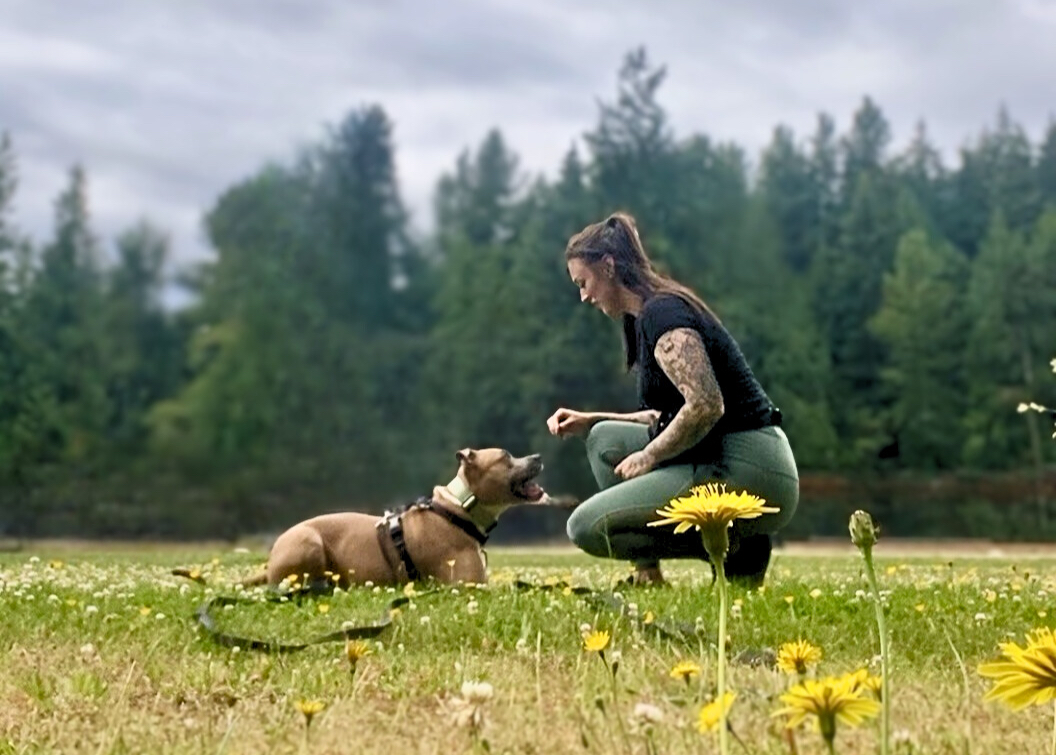
- Jan 5
- 4 min read
Updated: Feb 22
You’ve probably seen a lot of labels when looking for dog training help: positive reinforcement, reward-based, treat training. But what does that mean exactly?
Reinforcement is anything that makes a behavior more likely to happen again—and a dog’s world is full of it. In my teachings, and in alignment with modern behavioral science, positive reinforcement is our greatest tool for changing and strengthening behavior. It makes training fun, and when we have a solid understanding of what motivates our learners, we can use that to make training effective—to teach behaviors faster and robustly.
We'll also pay attention to what’s reinforcing your dog’s challenging behaviors, so we can use strategic setups and management to support better choices. I’ll dig deeper as you read on. And to be very clear: I do not use punishment, fear, or coercion in the name of training.
TL;DR Positive reinforcement training is a multifaceted approach to teaching that builds desired behaviors by making them worthwhile for the learner, while using strategic environmental set-up to prevent unwanted behaviors from being rehearsed.

Start With This: Behavior and Consequences
Simply put: Behaviors that lead to good outcomes tend to happen again.
This is something you already understand—even if you’ve never studied learning theory.
Think about your own life:
You’re likely to stay in a job where your work is appreciated and you're paid well.
You’re likely to repeat a habit that makes your day easier or more enjoyable.
You’re less likely to keep showing up somewhere you’re constantly criticized, underpaid, or made to feel disposable. Yuck.
Dogs are the same way.
Training with reinforcement intentionally uses things the learner finds valuable (food, play, distance, comfort, access to sniffing, social interaction) to teach and strengthen behaviors we want to see more often.
It’s Not Just “Feeding Cookies"
One of the biggest misconceptions is that positive reinforcement training is simply handing out treats, bribing dogs, and hoping for the best. I'd encourage anyone curious to look a little closer at the problem solving, planning, and skill behind it.
A positive reinforcement approach includes:
Health and wellness considerations: Sometimes behavior can be linked to pain, discomfort, or an underlying medical concern. When there’s a sudden onset of behavior or something feels “off,” a veterinary check should be the first step before moving forward with a behavior modification plan.
Antecedent arrangement: Proactively adjusting the environment and routines to set the stage for the behavior we want. With reactivity, as an example, that might look like closing the blinds to limit visual triggers, choosing quieter routes or lower traffic times, or crossing the street/using parked cars as a visual barrier. The goal isn't to “avoid forever,” but to create learning opportunities to reinforce the skills we want and help the learner build better habits over time.
Positive reinforcement: Adding something the learner values right after a behavior, which often increases the likelihood that the behavior will occur again. In the acquisition of new behaviors, or our effort to teach an alternate behavior, we lean heavily here. It's a huge part of our behavior modification plans and proves its efficacy time and time again. If we're smart with our application, we'll see it in the data (which is also a big part of our plan).
Differential reinforcement: Selectively rewarding behaviors you want more of instead of unwanted ones, whether that’s an alternative behavior (DRA) like your dog turning toward you instead of barking at that dog across the street, or an incompatible behavior (DRI) like keeping all four paws on the floor when guests arrive instead of jumping.

I want you to imagine being told to stop doing something that you've always done and that's always worked for you. You're now expected to do something entirely different. How would you want someone to approach you with that new expectation?
That’s where the framework comes in—helping us decide what setup and strategies make the most sense for the canine-learner and the environment they're in.
Prioritizing Welfare
Training isn’t all about what works. It’s also about how it feels.
Dogs are not robots. They’re sentient beings with nervous systems, past experiences, and limits. A training method that technically changes behavior but relies on fear or shutdown isn’t it. Full stop. It may create compliance, but it often comes with long-term costs.
Positive reinforcement training places a strong emphasis on understanding why a behavior is happening and solving the problem that’s fair to the dog.
It prioritizes:
Emotional safety
Learner choice and agency
The human-canine relationship
Honoring the function of behavior
Sustainable behavior change
Instead of asking, “How do we stop this behavior?” the focus becomes, “What need is this behavior meeting, and how can we meet that need in a more adaptive way?”

Why I Use the Label “Positive Reinforcement”
For me, this training goes beyond “rewarding the good.” It reflects an understanding of how species learn in the most joyful way. It empowers learners to make choices, guides success through strategic setups, and builds behaviors that are strong and reliable. Done well, it requires good mechanics, planning, problem-solving, and a deep understanding of the learner in front of you
I use this label because it keeps the focus where I want it. It centers teaching that's fair and respectful of our learner's choices. It greatly supports the human-canine bond, and is a way to teach behavior without sacrificing trust.
All Being Said, Here's What This Means for You and Your Dog
Choosing a positive reinforcement trainer means choosing someone who:
Looks at the whole picture, not just the behavior
Sees your dog as an individual, not a problem to fix
Focuses on teaching, not suppressing
Values your relationship as much as the end result
This approach isn’t permissive or all cookies and rainbows. It focuses on shaping behavior through reinforcement and proactive setup, while acknowledging that dogs are learning within environments we put them in and responding the best way they know how.
I appreciate the emphasis on humane training methods. Avoiding fear and punishment makes the process more respectful and effective for dogs. https://codepython.online/and-in-python